
A Comprehensive Guide on Ammonium Perchlorate: Hazards and Safety Practices
Ammonium perchlorate (AP) is the key component in rocket propellants and pyrotechnics. The compound poses significant health, environmental, and explosive hazards. Its dual role as an industrial catalyst and hazardous material requires rigorous safety protocols. This article synthesizes evidence from toxicological studies, regulatory guidelines, and incident analyses to define the risks associated with AP and […]
Top 5 Most Flammable Substances Used in Health Care
Introduction The use of different kinds of flammable substances is not a new thing in the health sector. This sector seems like the safest place on Earth, but behind the scenes, hospitals and medical centers across the United States store and use a variety of highly flammable substances. The Occupational Safety and Health Administration (OSHA) […]
Anhydrous Ammonia: A Comprehensive Guide on Safety Measures, Handling Protocols and Best Practices
Anhydrous ammonia, a compound of critical industrial and agricultural importance, is a colorless gas with a distinct pungent odor, composed of 82% nitrogen and 18% hydrogen (NH~3~). Its unique physical and chemical properties, including high solubility in water, low boiling point (-28°F), and significant expansion upon vaporization, make it indispensable in modern applications ranging from […]
Is Calcium Chloride Dangerous?
Although calcium chloride is essentially a type of salt, it serves many important purposes. It’s commonly used in deicing products, dust control agents, and even as a firming agent in packaged foods. Because of its wide commercial use, many people come into direct contact with it. But with such frequent exposure, an important question arises—can […]
Hazard Stickers: The Only Guide You Need for Safety Compliance and Risk Management
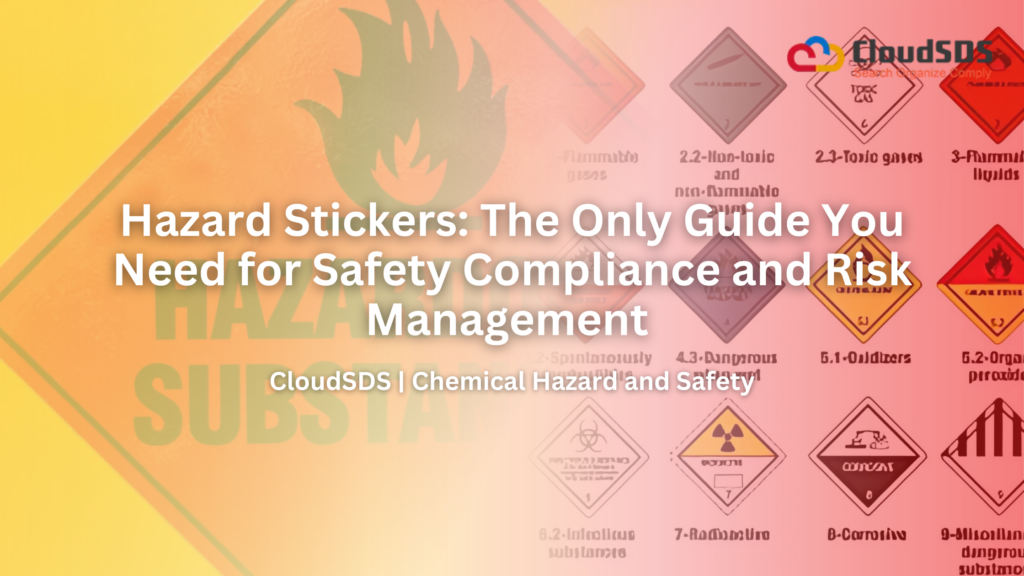
Ensuring safety in workplaces, transportation, and the environment hinges on one simple tool—hazard stickers. They may look small, but their impact is a lot wider. Proper labeling can prevent accidents, save money, and keep you on the right side of the law. If you want to protect your team, community, and business, knowing everything about […]
Alkylamines: Hazard and Safety A Detail Guide by CloudSDS
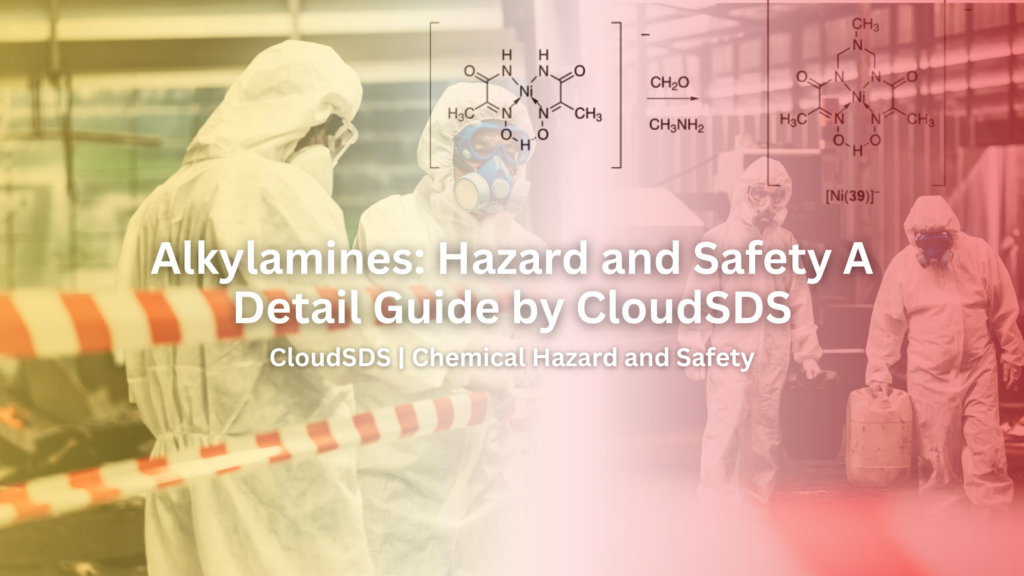
Industries such as pharmaceuticals, rubber processing, agriculture, and chemicals frequently use alkylamines. However, these substances can pose significant risks to workers if not managed correctly. So, what are the potential hazards of alkylamines, and how can they be handled safely? It’s crucial for organizations dealing with these compounds to fully understand their dangers and adopt […]
Allylamine: Exclusive Hazard and Safety Guide by CloudSDS
Allylamine is a dangerous organic chemical compound with the molecular formula C3H7N. Working with this compound necessitates careful safety measures and overall hazard perception. It is extremely flammable, reactive, and toxic in nature. This colorless, transparent liquid (CAS number 107-11-9) is widely used in industries. It is a preliminary material in drug synthesis procedures and […]
Everything You Need to Know About Allylamine Safety Measures
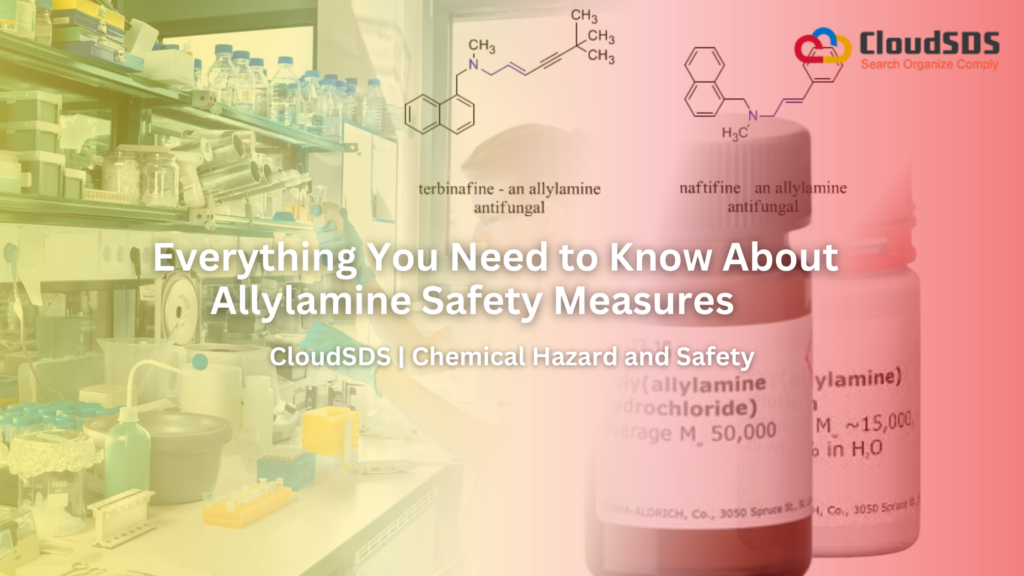
As a crucial chemical, Allylamine is utilized in numerous industries. This versatile organic compound is a highly flammable, colorless, and water-soluble liquid with a strong ammonia-like odor. The formula is CH2=CHCH2NH2, and it serves as a crucial precursor and building block in sectors such as: Organic synthesis Polymer chemistry Pharmaceutical development As a primary amine, […]
How Can Government Agencies Efficiently Track and Verify Compliance with Hazardous Material Regulations?
Government agencies are responsible for keeping people and the environment safe from harmful substances. But another major challenge is understanding and following all the safety rules while handling these materials properly. To do this effectively, agencies must track and verify compliance with various safety regulations. However, doing it manually can be slow, confusing, and prone […]
How Do SDS Management Tools Ensure Compliance with OSHA, WHMIS, REACH, or GHS Standards in Manufacturing?
From chemical handling to proper documentation, manufacturers must follow regulatory frameworks like OSHA, WHMIS, REACH, and GHS. One of the most effective ways to achieve and maintain compliance is by using SDS (Safety Data Sheet) management tools. Lacking the right SDS management tool can result in severe consequences. For example, in 2014, DuPont was penalized […]